Tickets, seats and the booking routes
Sumo tournament tickets: how to get a seat
Official site or guided package? Seat types, how the Japan Sumo Association sells tickets, and what to book if no tournament falls on your dates.
Browse all sumo experiences ↗Quick answer
For a Grand Sumo tournament you can buy a seat on the Japan Sumo Association's English ticket site, or book a package from a tour provider that adds a guide and help at the door. The official site sells a seat only, paid by card, printed at a Seven-Eleven in Japan, and it cannot be changed or cancelled. Tournaments run only six times a year, so check the Association's calendar before you choose. If none falls on your dates, a practice visit or a show is the alternative.
Four ways to see sumo
| Official site | Guided package | Stable or show | |
|---|---|---|---|
| You get | Seat only | Seat plus guide intro | No tournament seat |
| You choose | Date and seat type | Date only | Date and option |
| You pay in | Yen, by card | Your own currency | Your own currency |
| Ticket | Printed at Seven-Eleven | Guide helps at entry | Meeting point given |
| Changes | Not possible | Free to 24 h before | Free to 24 h before |
| Dates | Tournament days | Tournament days | Not tied to tournaments |
Three different things people call sumo tickets
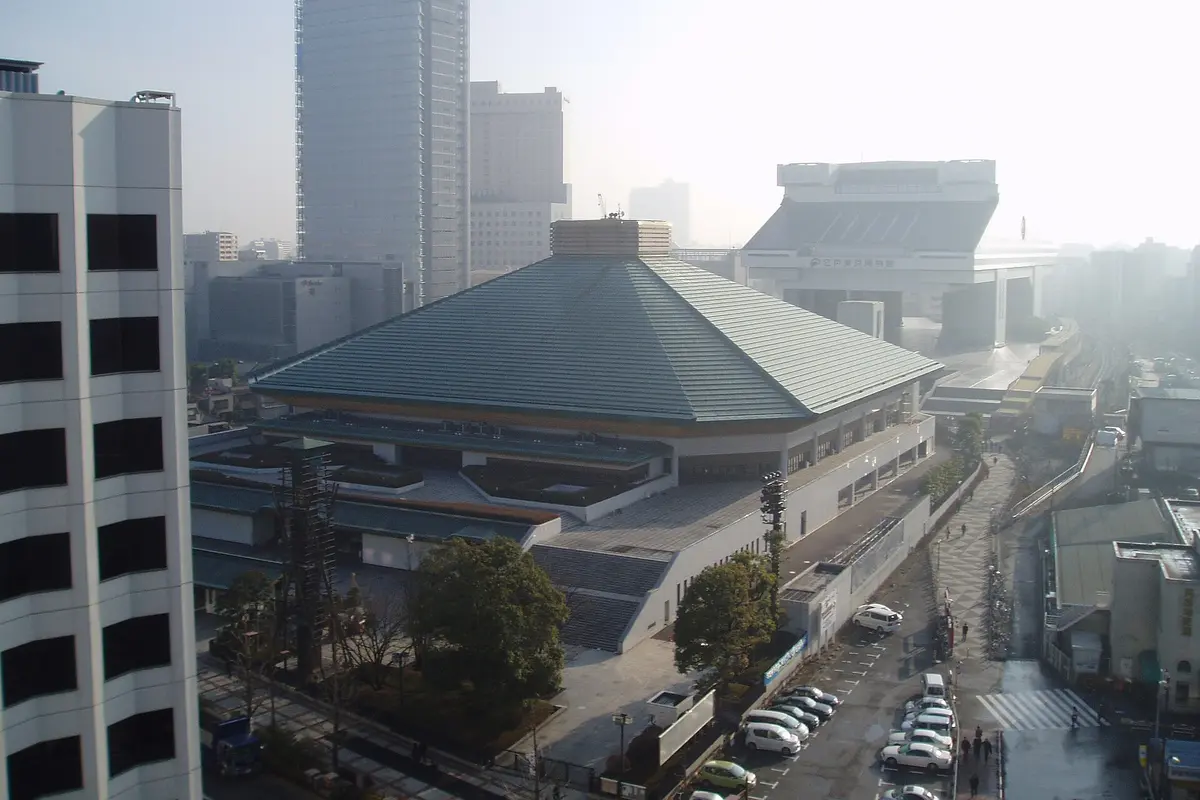
A tournament seat, a stable practice visit and a sumo show are different products, and the booking page should say which one you are buying. A tournament, called a honbasho, is the professional sport: ranked bouts on set days in an arena. A morning practice visit takes you into a training stable to watch wrestlers train. A show is a staged evening, often with a meal, and is often performed by retired wrestlers. Only the first gets you a seat at a tournament, and this guide starts there.
Which seat: ringside, box or chair
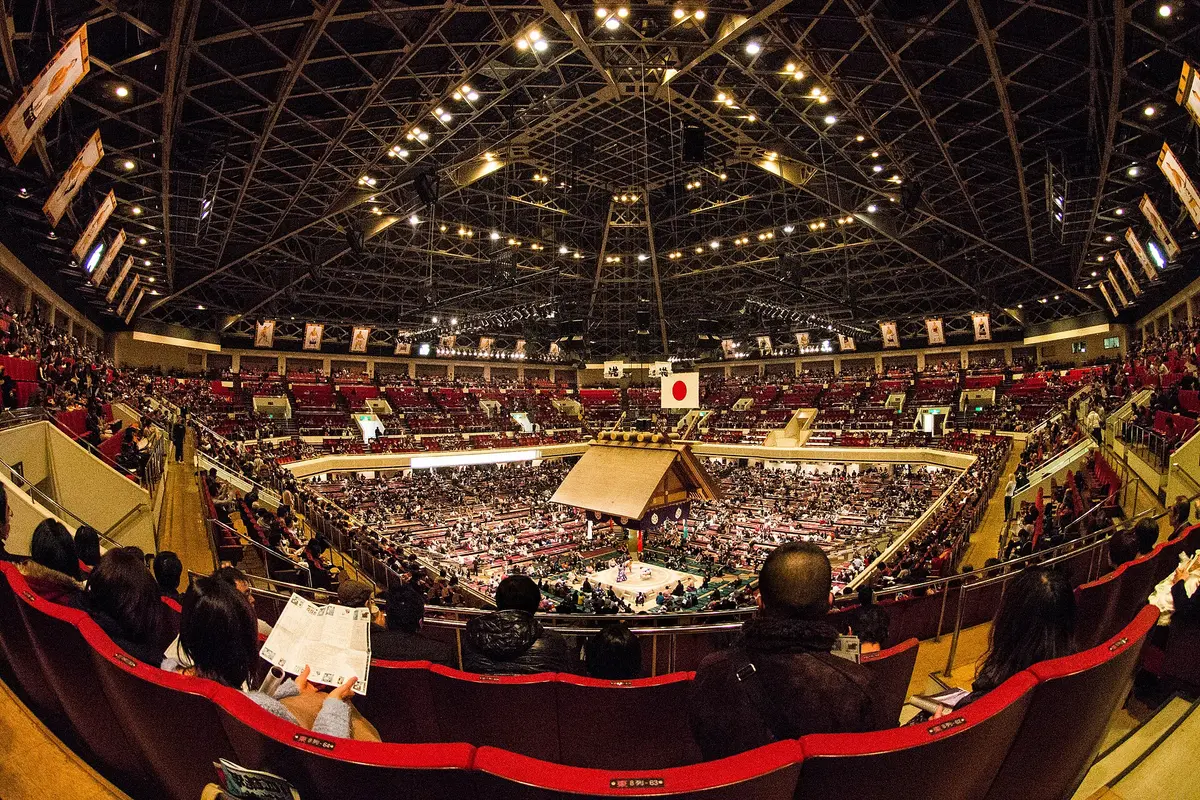
The Association sells three kinds of seat. Ringside seats, called tamari, sit at the edge of the ring and are sold per person, but the official English ticket pages mark them as available only on the Japanese-language site. Box seats, called masu-seki, are floor boxes where you take off your shoes and sit on cushions. The basic rule is four people to a box, though some tournaments add boxes for fewer guests. Chair seats are stadium-style seats higher up. GO TOKYO calls the boxes a bit cramped by Western standards and suggests a table seat with chairs for a full day, and some tournaments add a pair seat with a table.
- Ringside: per person, Japanese-language site only
- Box: shoes off, cushions, four to a box as a rule
- Chair: per person, in the upper tiers
- Children aged 4 and over need their own ticket
Buying on the official site
Ticket Oosumo is the Association's official ticket site, and it has an English version. You pick a date and a seat category and pay by credit card, with a service fee per ticket on top of the seat price. The English page says tickets can only be printed at a Seven-Eleven in Japan, using the details in your confirmation, and your seat number shows when the ticket is issued. Purchases can't be changed or cancelled, and a lost ticket means no entry. If a tournament sells out, the official page says none are sold on the day.
When tickets go on sale
Each tournament's sale date is published in the Association's schedule, next to the first and last day, and the gap before opening day differs: some tournaments open about a month ahead, others about two months. Look up your tournament there rather than relying on a rule of thumb. The official pages price weekdays and weekends or holidays in separate categories, so decide which day you want before the sale opens. On the final day, the Emperor's Cup is presented after the last bout.
What one ticket covers on the day
A ticket covers every bout of the day, from the morning to the early evening, and the official pages say you can enter and leave during the matches. Re-entry rules differ by tournament, from a single return to none, so read the page for yours. The top-division bouts begin in the afternoon, so you can choose how much of the lower divisions to watch. The lower ranks fight first, and each wrestler in the top two divisions fights once a day.
What a guided package adds
Some tour providers sell a chair seat with a local guide. One Tokyo package of this kind pairs the seat with an English-speaking guide who gives an introduction to the ranks, rituals and rules before you enter, and helps with admission. Seat locations can't be chosen, and a booking covers up to three people, so a bigger group needs separate bookings that may not sit together. Plan on watching the bouts from your own seat, and check on the booking page whether the guide stays. Booked through GetYourGuide, it can be cancelled free up to 24 hours before, and you pay in your own currency.
Read the resale warning before you book
The official ticket pages say that resale or transfer of tickets without the organiser's permission is prohibited, with an exception for non-profit transfers between family, friends and similar contacts. They add that anyone who obtains tickets to organise tours or packages without the organiser's permission may be refused entry. That is a reason to ask any provider, before you pay, how its seats are issued. A package is not the same as a ticket from the official site, and the two should not be mixed up when you compare them.
A short checklist before you pay
Tournament seats, practice visits and shows are sold in different ways, and the details that trip people up are small ones: who the seller is, what the ticket is, and when you can still back out. Whichever route you take, confirm these points on the booking page before you pay, and keep the confirmation where you can open it without a signal:
- Which product it is: a tournament seat, a practice visit or a show
- The day and the seat type, and whether you can choose it
- How many people one booking covers
- How the ticket reaches you, and where you meet
- The cancellation terms, and whether photo ID is asked for
How to choose
Buy on the official site if you can be at the sale on the day it opens, want to pick your own seat category and don't need help. Book a package if your dates are fixed, you want an introduction and help at entry, and you want a cancellation window. If no tournament falls on your dates, neither route works. The table above sets the options side by side. Whichever you pick, tournament days are set by the Association, so confirm your day on its schedule first.
No tournament on your dates?
Tournaments run in six months of the year, so many trips miss one. Two things fill the gap, and they are not the same. A morning practice visit puts you in a stable's training room. Japan's national tourism organisation says casual, spontaneous visits are not encouraged, so most visitors go on an arranged tour. A show is a staged evening, usually with a meal, built for visitors. Neither gives you a ranked tournament bout, the ring-entering ceremony or the crowd.
Read next: See sumo when there's no tournament: shows and experiences
Who this isn't for
If your plans may change, official tickets can't be changed or cancelled, so a package with a cancellation window suits you better. If you want ringside, the English site won't sell it. If you are a group of four or more, some packages cap a booking at three, so check before you rely on one. And if you want only an hour or two of sumo, a tournament day is too long: a morning practice visit or a show fits better.
Read next: Watching sumo morning practice: what to expect and how to behave
Frequently asked questions
Where do I buy official Grand Sumo tickets?
On Ticket Oosumo, the Japan Sumo Association's official ticket site, which has an English version. The Association's own ticket page links to it. Payment is by credit card, and tickets are printed at a Seven-Eleven in Japan.
Can I buy sumo tickets on the day?
Not if the tournament has sold out. The official ticket page says that when tickets are sold out, none are sold on the day. Check the official site for your date rather than counting on a seat at the door.
Do children need a ticket?
Yes, from age 4. The official pages say children aged four and over need a ticket, and several of them say there is no child discount. Box seats are sold by the box, so a family of four fills one.
Can I change or cancel an official ticket?
No. The official pages say tickets cannot be changed or cancelled for any reason, and a lost ticket means no entry. Bookings made through GetYourGuide are different: the tournament package, practice visits and shows we checked allow free cancellation up to 24 hours before.
Is a guided tournament package worth it?
It depends on what help you want beyond the seat. A package adds an introduction and help at entry, and you book in your own currency with a cancellation window. If you can buy on the sale date and don't need help, the official site is simpler.
Is a sumo show or a practice visit a tournament ticket?
No. A show is a staged evening and a practice visit is a morning at a training stable. Neither includes a seat at a Grand Sumo tournament.
Sources
- How to buy tickets (Japan Sumo Association)
- Grand Tournament Schedule (Japan Sumo Association)
- Ticket Oosumo, official English ticket site
- May Grand Tournament ticket information (Ticket Oosumo)
- Sumo for the Win (GO TOKYO, Tokyo Convention and Visitors Bureau)
- Experience Sumo (Japan National Tourism Organization)
- Sumo (Wikipedia)