壱Japan · The living sport of the gods
What you're actually watching
A sport that is also a ceremony
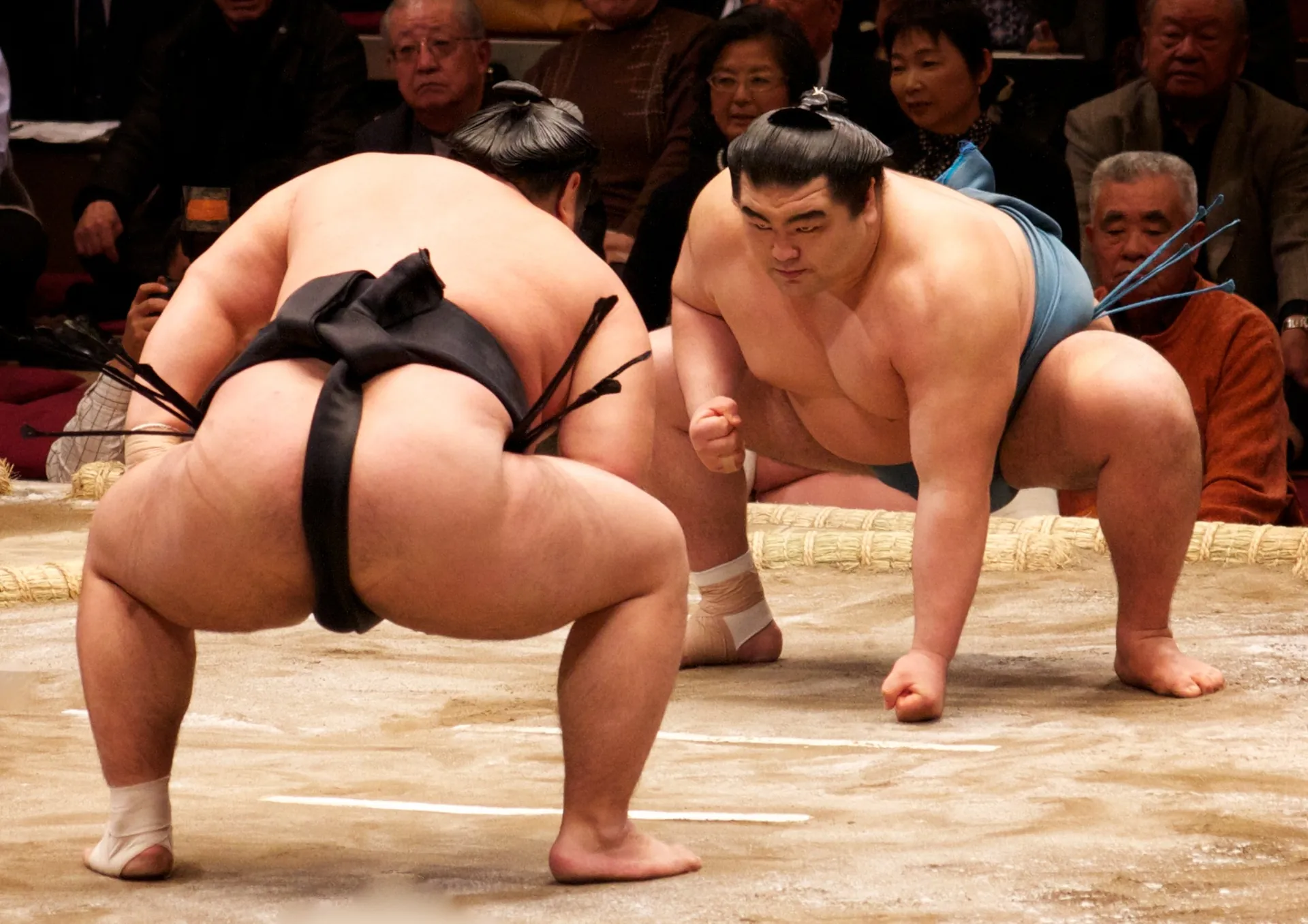
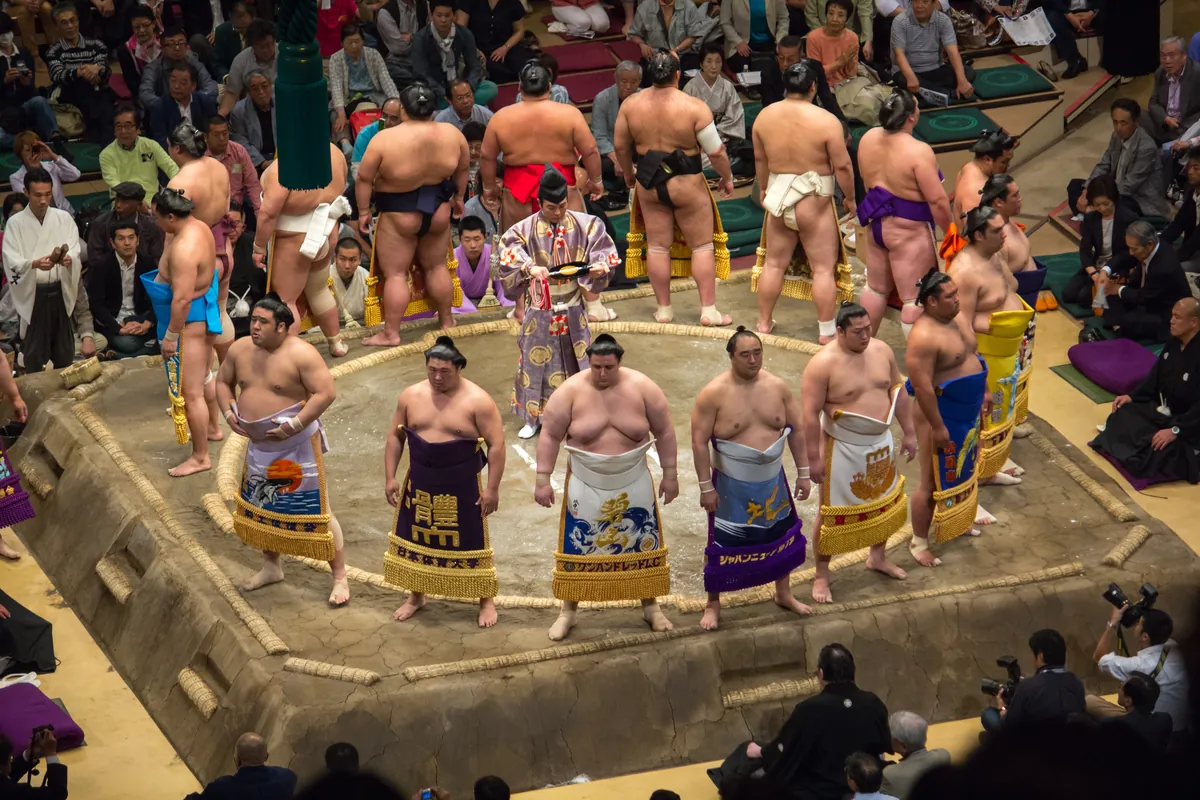
Sumo looks simple — force the other man out of the ring, or make any part of his body except the soles of his feet touch the ground — but almost everything around those few seconds of action is ritual. The salt the wrestlers throw purifies the ring. The leg-stomping (shiko) drives away evil spirits. The referee wears a kimono in the style of Kamakura-period samurai, with a black hat that resembles a Shinto priest's, and carries a fan, and the roof hanging over the ring is built like a shrine. When you understand that sumo grew out of harvest rites performed for the gods more than a thousand years ago, the long stare-downs and the slow, deliberate build stop feeling like delay and start feeling like the point. The clash, when it comes, is over almost before you can register it — which is exactly why the ceremony matters.
Three ways to see it — and only one needs a tournament
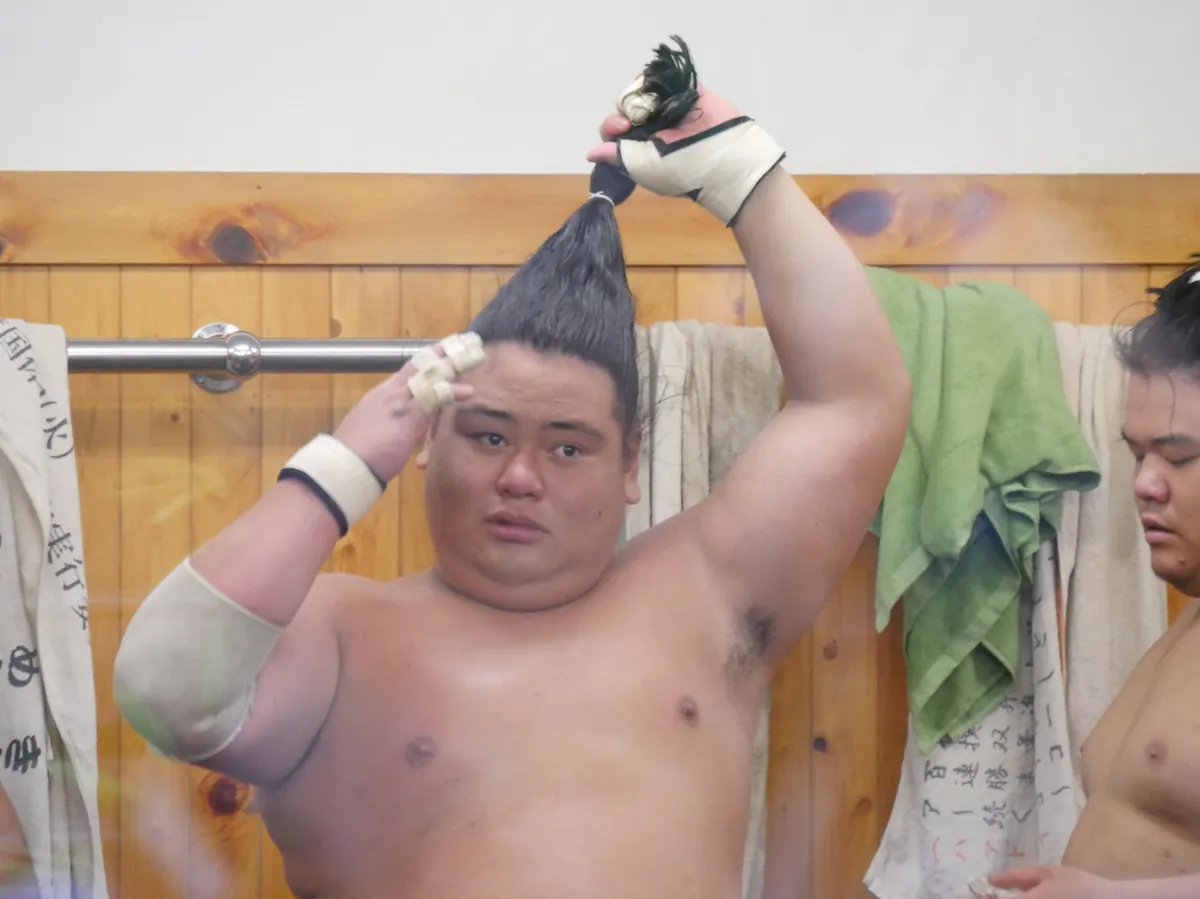
There are really three sumo experiences open to visitors, and it helps to know which one you're chasing. The first is a grand tournament (honbasho): fifteen days of top-division bouts in a packed arena, held six times a year in fixed months. The second is morning practice (asa-geiko) at a training stable, where you sit in silence and watch wrestlers grind through drills up close — available on many mornings year-round, tournament or not. The third is an evening sumo show, where retired professional wrestlers demonstrate bouts and technique, usually with a bowl of the wrestlers' chanko-nabe hotpot — a reliable option when no tournament is running and stables are travelling. Most first-time visitors assume they need a tournament. In truth, the tournament runs only on fixed dates and its tickets can sell out, while practice visits and shows are offered on many more dates.
Ranks, records and the banzuke
Sumo is ruthlessly hierarchical. Every wrestler's standing is printed on the banzuke, a ranking sheet reissued before each tournament in beautiful brushed calligraphy. The top division is makuuchi; above the rank-and-file maegashira sit the titled ranks — komusubi, sekiwake, ozeki — and, at the summit, the yokozuna. A wrestler is promoted or demoted after every tournament based purely on his win-loss record over the fifteen days, so fortunes swing constantly and there is drama in the lower bouts as well as the headline ones. Knowing roughly where the men in front of you sit on that ladder turns an afternoon of unfamiliar names into a story you can follow.
Where and when it happens
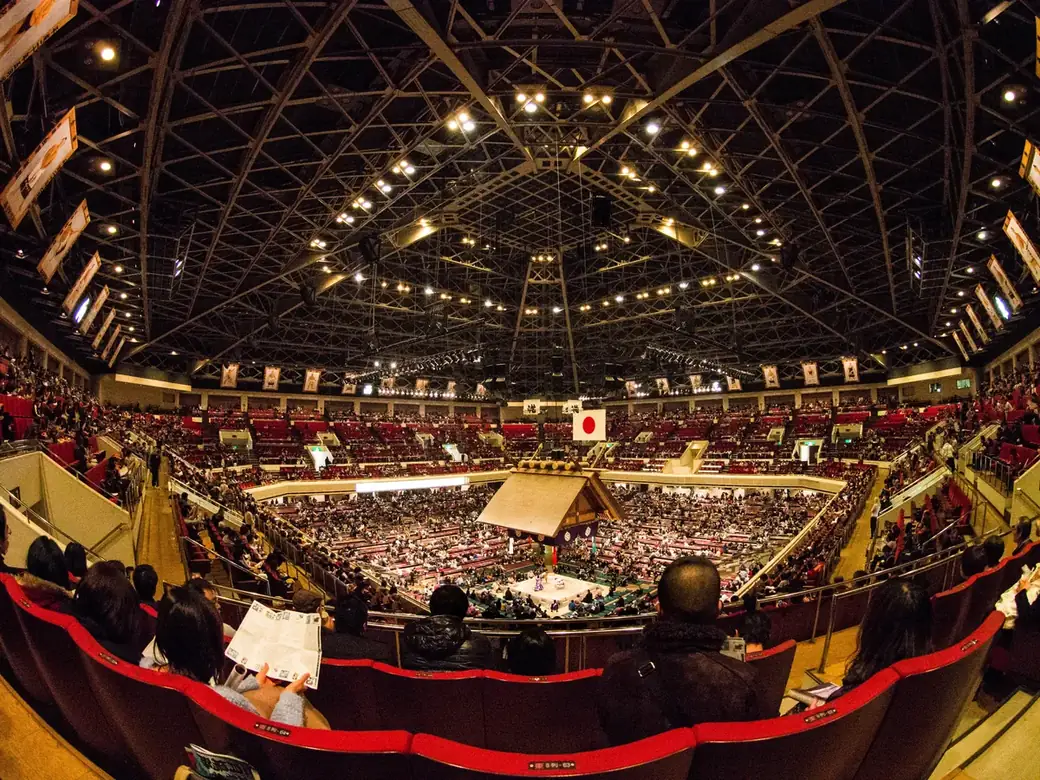
The tournament calendar is fixed and worth planning around: Tokyo hosts three of the six tournaments (January, May and September) at the Ryogoku Kokugikan, with Osaka in March, Nagoya in July and Fukuoka in November. Tokyo is the easiest for most visitors — the arena is central, the surrounding Ryogoku district is dense with stables, chanko restaurants and the Sumo Museum, and the tournaments fall in seasons many travellers are already visiting. Outside those windows the arenas are dark, but the sport doesn't stop: stables train through most of the year, and shows run in Tokyo regardless of the calendar. The single most important planning fact is that tournament tickets go on sale on a date the Japan Sumo Association publishes for each tournament, some weeks ahead, and some days sell out — so the earlier you fix your dates, the better your options.
絵The sport, in pictures
Ceremony, ring and stable
弐Ways to experience sumo
Ways to experience sumo
Every one of these is bookable through GetYourGuide, with live prices in your currency and free cancellation on most options. Whether or not a tournament falls during your trip, there's a way in.
The main event
Grand Sumo Tournament — reserved seat & guided visit
Meet a local English-speaking guide before you go in for an introduction to the ranks, rituals and rules and help with admission, then watch the tournament from your assigned chair seat. Seat locations can't be chosen.
Tournament months only (Jan/May/Sep Tokyo · Mar Osaka · Jul Nagoya · Nov Fukuoka)
Check dates & prices ↗Year-round · mornings
Sumo morning practice (asa-geiko) tour
Watch wrestlers train up close at a real sumo stable. A guide escorts you from the meeting point to the stable, and afterwards there is a chance to take photos with the wrestlers.
Runs on many mornings through the year; stables travel during tournaments
Check dates & prices ↗Year-round · premium
Premium morning practice — seated, with photos
A seated, unhurried view of dawn training at an Asakusa stable that has produced yokozuna. Chairs are set out for you, a live guide reads the drills as they unfold, and afterwards there is time to photograph with the rikishi and take home a souvenir set.
Year-round; English-language guide; runs about two hours
Check dates & prices ↗Any evening
Sumo show with chanko-nabe hot pot
Watch demonstration bouts and technique up close from retired professional wrestlers while you eat chanko-nabe, the hot pot that fuels the sport. A relaxed, reliable option when no tournament is on.
Available year-round, independent of the tournament calendar
Check dates & prices ↗Hands-on
Train with a former wrestler & share a meal
Step onto the practice floor with a retired professional, try the stances and moves yourself, then eat together — a warm, memorable two-hour session that works whatever the tournament schedule is doing.
Year-round; suitable for families and small groups
Check dates & prices ↗信Book with confidence
- Free cancellation Up to 24h before on bookings through GetYourGuide — full refund
- Reserve now, pay later Fix your tournament seat or stable visit now — nothing's charged until closer to the day
- No hidden fees What's quoted for your dohyo-side seat or morning session is what lands on your card — shown in your own currency
- Secure checkout Booked through GetYourGuide's protected payment
参The 2026 tournament calendar
The 2026 Grand Sumo tournament calendar (honbasho)
Six tournaments a year, fifteen days each. Tickets go on sale some weeks before each one, on a date the Japan Sumo Association publishes — plan your dates early.
| Tournament | 2026 dates | City | Venue |
|---|---|---|---|
| Hatsu Basho (January) | 11–25 Jan 2026 | Tokyo | Ryogoku Kokugikan |
| Haru Basho (March) | 8–22 Mar 2026 | Osaka | EDION Arena Osaka |
| Natsu Basho (May) | 10–24 May 2026 | Tokyo | Ryogoku Kokugikan |
| Nagoya Basho (July) | 12–26 Jul 2026 | Nagoya | IG Arena |
| Aki Basho (September) | 13–27 Sep 2026 | Tokyo | Ryogoku Kokugikan |
| Kyushu Basho (November) | 8–22 Nov 2026 | Fukuoka | Fukuoka Kokusai Center |
肆The visitor's guide to sumo
The visitor's guide to sumo
Tickets, seats and the booking routes
Sumo tournament tickets: how to get a seat
Official site or guided package? Seat types, how the Japan Sumo Association sells tickets, and what to book if no tournament falls on your dates.
Read the guide →When it runs, and what a day is like
Sumo tournament schedule and the day itself
The six-tournament calendar, how to read the Association's schedule, and what a tournament day looks like, from getting to Ryogoku to the last bout.
Read the guide →Asa-geiko
Watching sumo morning practice: what to expect and how to behave
Morning practice is the most intimate way to see sumo — and the most rule-bound. Here's what asa-geiko is really like and the etiquette that keeps you welcome.
Read the guide →The basics
Sumo rules explained: how a bout is won
The rules take one sentence; reading a match takes a little more. Here's how bouts are won, what the rituals mean, and how to follow the action.
Read the guide →History
A short history of sumo
From harvest ritual to professional sport: how a ceremony offered to the gods became Japan's oldest organised competition.
Read the guide →Year-round
See sumo when there's no tournament: shows and experiences
Your trip doesn't line up with a honbasho? You can still see sumo up close. Here are the year-round ways in — and who each suits.
Read the guide →伍Sumo questions, answered
Sumo questions, answered
How do I get tickets to a Grand Sumo tournament?
Tickets are released some weeks before each tournament, on a published sale date, through the Japan Sumo Association's official channel and authorised agents, and the best days sell out quickly — especially in Tokyo and on the opening weekend and final days. You can try to buy direct, which is cheapest but often hard for overseas visitors because of language and same-day competition, or book a guided ticket package that bundles a reserved seat with an English-speaking guide for certainty on fixed travel dates.
When are the sumo tournaments in 2026?
There are six grand tournaments in 2026: January (11–25) and May (10–24) and September (13–27) in Tokyo, March (8–22) in Osaka, July (12–26) in Nagoya, and November (8–22) in Fukuoka. Each runs fifteen days from one Sunday to the next. Tokyo tournaments are the most popular and central for visitors.
Can I see sumo if there's no tournament during my trip?
Yes. Grand tournaments only run for about ninety days a year, but you can still watch morning practice (asa-geiko) at a training stable on many mornings year-round, or attend an evening sumo show where former and amateur wrestlers demonstrate bouts and technique, usually with a chanko-nabe hotpot meal. Both are available independent of the tournament calendar and are often more intimate than a tournament seat.
What are the different sumo seat types?
There are three broad options. Ringside 'tamari' cushions sit at the ring's edge — thrilling but expensive and hard to get, and on the official English ticket pages they are sold only through the Japanese-language site. 'Masu-seki' box seats are small railed tatami boxes sold for four people, the classic sociable experience. 'Isu-seki' arena chair seats in the upper tiers are the most affordable and easiest to buy, with a clear view of the whole ring.
How long does a sumo tournament day last?
Bouts run through the day starting with the lowest ranks in the morning, but the top-division matches and the full ceremony come in the afternoon, and the programme finishes in the early evening. Aim to be seated before the top-division ring-entering ceremony, one of the most beautiful moments of the day, and stay for the final headline bouts.
What is morning practice (asa-geiko) and can visitors watch?
Asa-geiko is the early-morning training that happens at sumo stables through most of the year. Some stables allow a small number of visitors, but rules are strict, access isn't guaranteed and instructions are in Japanese, so most visitors go with a guide who has an arrangement with a stable. You sit in silence and watch wrestlers drill up close — the most intimate way to see the sport.
What is the etiquette for watching sumo practice?
Treat it as being a guest in someone's home: stay completely silent, sit where you're told (usually on the floor), keep your legs tucked in rather than stretched out, don't eat or drink, keep your phone on silent, and follow the photography rules exactly — some sessions allow silent flash-free photos, others none. Don't stand, stretch or leave in the middle of a session. A guide will tell you what's allowed at your specific venue.
How is a sumo bout won?
A wrestler wins by forcing his opponent out of the ring, or by making him touch the ground with any part of his body other than the soles of his feet. There are no rounds, points or weight classes, so a smaller wrestler can beat a much larger one with the right timing. A robed referee in the ring and five judges around it decide close calls, and can order a rematch if a result is too tight to separate.
Why do sumo wrestlers throw salt?
Throwing salt is a purification ritual inherited from sumo's origins as a Shinto ceremony — it cleanses the ring before the bout. Along with the leg-stomping (shiko), the clapping and the stare-downs, it's part of the ritual build-up that precedes the few seconds of actual fighting, and it also serves as psychology and timing between the wrestlers.
What is chanko-nabe?
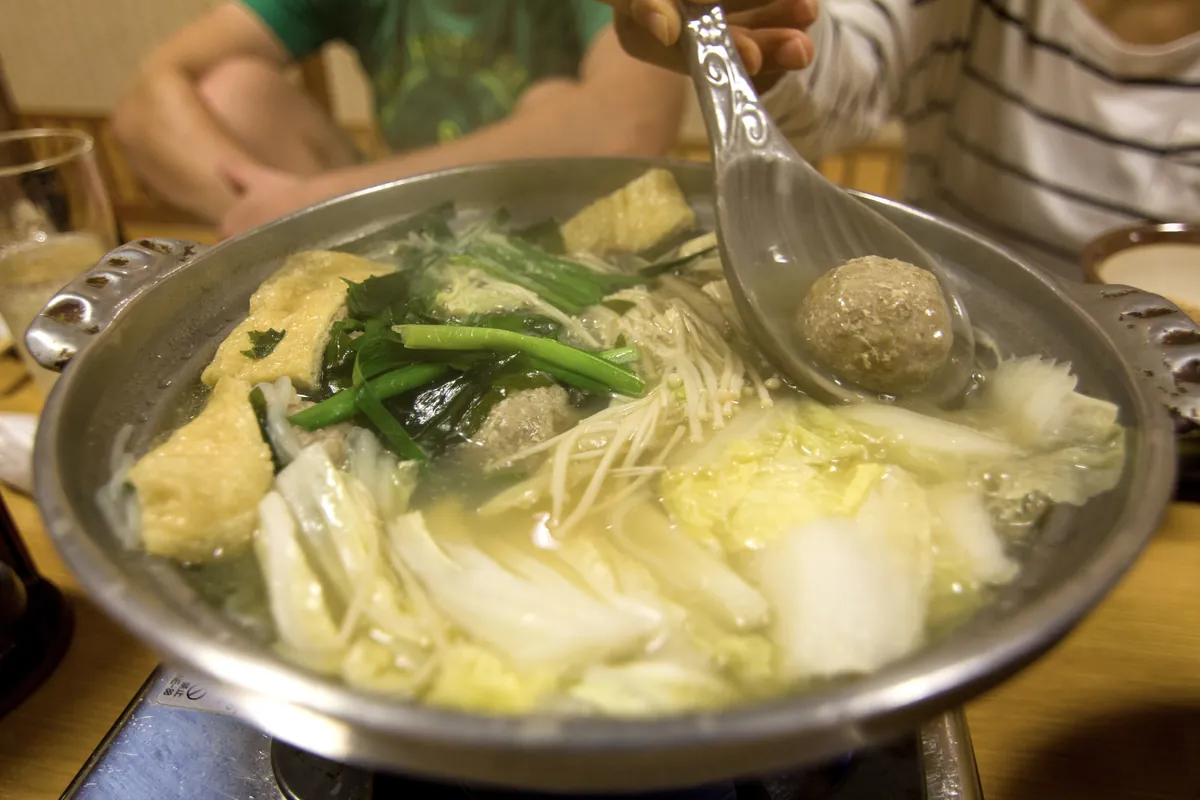
Chanko-nabe is the protein-rich hotpot stew that sumo wrestlers eat in large quantities to build their frames — a broth packed with meat, fish, tofu and vegetables. It's a staple of stable life, and you can try it at chanko restaurants in Tokyo's Ryogoku district or as part of many sumo shows and experiences.
What is a yokozuna?
Yokozuna is the highest rank in sumo, the grand champion. Only a handful of wrestlers reach it in any generation, promotion requires sustained dominance rather than a single good tournament, and once earned the rank is never taken away — a yokozuna who can no longer perform to its standard is expected to retire rather than be demoted.
Where is sumo held in Tokyo?
Tokyo's tournaments are held at the Ryogoku Kokugikan, a large arena in the Ryogoku district on the east side of the city. The same district is the heart of the sport, dense with training stables, chanko restaurants and the Sumo Museum, which is free to enter outside tournament days, making it the best base for any sumo-focused visit.
Is a guided sumo tour worth it?
For most overseas visitors, yes. A guided tournament visit removes the on-sale scramble and language barrier and reserves a seat for the date you book, with someone to explain the ranks, rituals and etiquette. For practice visits, a guide secures access and manages the strict etiquette. You pay more than face value, but you trade uncertainty and confusion for a reserved place and a spectacle you can actually follow.
How much do sumo tickets cost?
Prices vary widely by seat type, tournament and how you book — arena chair seats are the most affordable, box seats cost more per person, and ringside cushions are the priciest and hardest to get. Live prices for guided tickets and experiences are shown in your own currency when you book. We don't quote fixed figures here because they change by tournament and availability.
Can I take photos at sumo?
It depends where you are. In the arena, general seats usually allow photography, but the conditions can differ by seat, so check the conditions on your ticket. At morning practice the rules are stricter and vary by stable — some allow silent, flash-free photos, others none at all. Always follow the specific instructions for your seat or venue, and never use flash.